
Business That Provided Income and Life Lessons
Starting a business often begins with dreams of financial freedom and entrepreneurship success. However, the most profound transformations come not just from the business income generated, but from the invaluable life lessons learned along the journey. When we examine successful entrepreneurs who have built profitable business ventures, we discover that their greatest achievements extend far beyond monetary gains—they’ve gained wisdom, resilience, and a completely new perspective on life itself.
Table of Contents
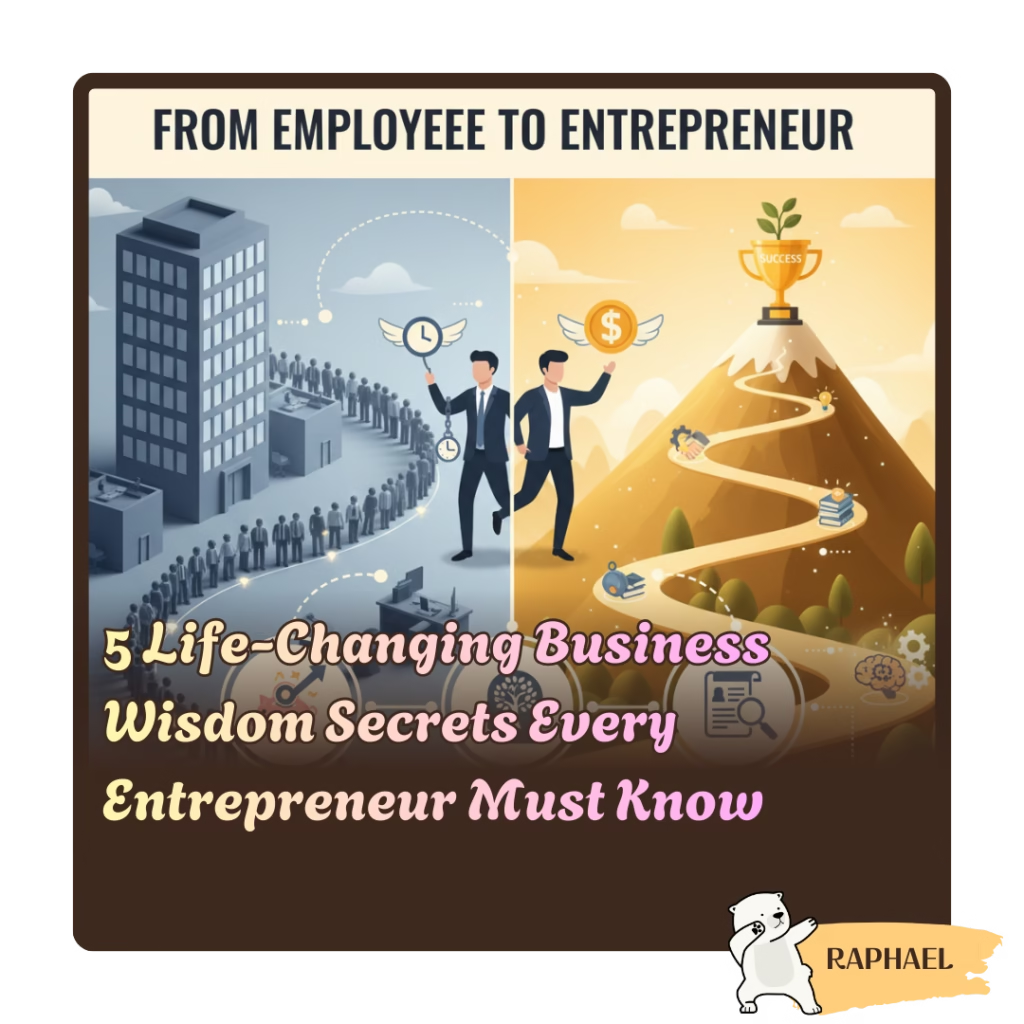
The story of transformation through business growth reveals how entrepreneurial ventures serve as powerful teachers, shaping not only our bank accounts but our character, decision-making abilities, and understanding of what truly matters in life. This dual benefit of income generation and personal development makes entrepreneurship one of the most comprehensive forms of business education available.
The Unexpected Journey from Employee to Entrepreneur
Every successful entrepreneur remembers the pivotal moment when their perspective shifted from seeking job security to embracing the uncertainty and potential of business ownership. This transition represents more than a career change—it’s a fundamental transformation in how we view risk, opportunity, and personal growth.
From Stable Employment to Business Vision
The traditional path of employment offers predictability and security, but it often limits our potential for both income generation and personal development. According to the Global Entrepreneurship Monitor 2023, 73% of successful entrepreneurs cite learning from failure as the most valuable life lesson their business taught them—more than any formal education. This statistic reveals a profound truth about the educational value of entrepreneurship that no classroom can replicate.
The transition from employee to entrepreneur requires a fundamental shift in mindset. Where employment teaches us to follow instructions and minimize risk, business success demands that we learn to make decisions with incomplete information, embrace calculated risks, and take full responsibility for outcomes. This transformation process serves as an intensive course in personal development, teaching resilience, adaptability, and strategic thinking.
The journey typically begins with a simple realization: the income ceiling in traditional employment is largely predetermined, while entrepreneurship offers unlimited potential for both financial and personal growth. However, the real education begins when we discover that building a profitable business requires us to develop skills we never knew we needed—leadership, emotional intelligence, financial acumen, and the ability to inspire others to share our vision.
| Transition Aspect | Employee Mindset | Entrepreneur Mindset | Growth Outcome |
|---|---|---|---|
| Risk Approach | Avoid all risks | Calculate and manage risks | Enhanced decision-making |
| Income Potential | Fixed salary ceiling | Unlimited growth potential | Financial freedom mindset |
| Learning Style | Formal training programs | Real-world problem solving | Practical wisdom acquisition |
The Role of Mentorship in Business Development
One of the most valuable aspects of entrepreneurial growth is the natural mentorship that emerges through business education and networking. Successful entrepreneurs understand that business wisdom is not gained in isolation—it requires learning from those who have walked the path before us. This mentorship relationship provides both practical guidance and emotional support during the challenging phases of business growth.
A Harvard Business School study found that businesses started by entrepreneurs who view their venture as a ‘life teacher’ generate 40% higher revenue growth compared to those focused solely on profit maximization. This finding highlights the importance of approaching business with the right mindset—seeing challenges as learning opportunities rather than obstacles to overcome.
Effective business mentors provide more than just tactical advice; they share the philosophical foundations that support long-term success. They teach us to view setbacks as valuable data rather than failures, to see competition as validation of market demand rather than threats, and to understand that sustainable business income flows from creating genuine value for others.
The mentorship process works both ways—as we grow in our entrepreneurial journey, we naturally become mentors to others who are beginning their own transformation. This cycle of learning and teaching reinforces our own life lessons while contributing to a community of growth-minded individuals who support each other’s success.
| Mentorship Benefits | Personal Impact | Business Impact | Long-term Value |
|---|---|---|---|
| Wisdom Transfer | Accelerated learning curve | Fewer costly mistakes | Sustainable growth foundation |
| Network Expansion | Increased opportunities | Strategic partnerships | Market positioning advantage |
| Emotional Support | Enhanced resilience | Better decision-making | Leadership development |
Building Systems for Sustainable Growth
The most successful entrepreneurs learn to distinguish between working in their business and working on their business. This distinction represents a crucial life lesson that extends far beyond business operations—it teaches us about the power of systems thinking and the importance of building sustainable structures that can function independently of our constant attention.
Research by the Kauffman Foundation shows that 68% of entrepreneurs report that running a business improved their decision-making skills in personal life, with 45% saying it enhanced their risk assessment abilities. This improvement occurs because building a profitable business requires us to develop systematic approaches to problem-solving, resource allocation, and strategic planning.
The process of creating business systems teaches valuable lessons about delegation, trust, and the multiplication of effort. Entrepreneurs learn that true business growth comes not from working harder, but from working smarter—creating processes and systems that can generate results even when we’re not directly involved. This lesson transforms how we approach all areas of life, from personal relationships to financial management.
Successful system building requires a deep understanding of cause and effect relationships, the ability to document and refine processes, and the wisdom to know when to maintain consistency and when to adapt to changing circumstances. These skills, developed through entrepreneurship, become valuable assets in every aspect of life.
The implementation process involves several key phases: initial system design based on best practices, testing and refinement through real-world application, documentation of successful processes, training others to execute the systems, and continuous improvement based on results and feedback. Each phase teaches specific lessons about planning, execution, measurement, and adaptation.
| System Component | Business Application | Life Application | Skill Development |
|---|---|---|---|
| Process Documentation | Standard operating procedures | Personal productivity systems | Organizational thinking |
| Performance Metrics | Revenue and growth tracking | Goal achievement measurement | Analytical skills |
| Continuous Improvement | Business optimization | Personal development | Adaptive learning |
The Educational Value of Business Challenges

Every entrepreneur faces moments of uncertainty, financial pressure, and strategic dilemmas that test their resolve and creativity. These challenges, while often stressful in the moment, provide some of the most valuable business education available. Unlike theoretical learning, business challenges force us to apply knowledge under pressure and develop practical wisdom that can only come from real-world experience.
Learning from Failure and Setbacks
The relationship between failure and learning in entrepreneurship is fundamentally different from other areas of life. In business, failure is not just inevitable—it’s essential for growth and development. According to a 2024 survey by Forbes, businesses that prioritize both financial success and personal development have a 60% higher survival rate after 5 years compared to purely profit-driven ventures. This statistic demonstrates that viewing challenges as learning opportunities rather than obstacles creates more resilient and successful businesses.
Successful entrepreneurs develop a unique relationship with failure that transforms setbacks into stepping stones. They learn to analyze what went wrong without becoming emotionally overwhelmed, extract valuable lessons from mistakes, and apply those lessons to future decisions. This process builds emotional resilience, analytical thinking skills, and the confidence to take calculated risks.
The life lessons learned from business failures extend far beyond the business context. Entrepreneurs who learn to handle business setbacks with grace and wisdom find themselves better equipped to handle personal challenges, relationship difficulties, and unexpected life changes. The skills developed through overcoming business obstacles—persistence, creativity, resourcefulness, and emotional regulation—become valuable assets in all areas of life.
The key to learning from failure lies in developing a systematic approach to analysis and improvement. This involves documenting what happened, identifying the specific factors that contributed to the failure, determining what could have been done differently, and implementing changes to prevent similar issues in the future. This process transforms failure from a negative experience into a valuable source of business wisdom.
| Failure Response | Traditional Approach | Entrepreneurial Approach | Learning Outcome |
|---|---|---|---|
| Emotional Reaction | Blame and avoidance | Analysis and acceptance | Emotional intelligence |
| Problem-Solving | Seek external solutions | Develop internal capabilities | Self-reliance |
| Future Planning | Risk avoidance | Risk management | Strategic thinking |
Developing Financial Intelligence Through Business Management

Managing business income and expenses provides an intensive education in financial intelligence that extends far beyond basic accounting. Entrepreneurs learn to understand cash flow patterns, investment returns, risk assessment, and the relationship between short-term decisions and long-term financial health. These skills, developed through practical application, create a foundation for personal financial success that no theoretical education can match.
The process of building a profitable business teaches valuable lessons about the difference between income and profit, the importance of reinvestment for growth, and the strategic value of maintaining financial reserves. Entrepreneurs learn to make decisions based on financial data rather than emotions, to understand the true cost of business decisions, and to balance growth investments with financial stability.
The Small Business Administration reports that entrepreneurs who actively seek mentorship and life lessons from their business experience are 2.3 times more likely to scale their operations beyond $1 million in annual revenue. This correlation suggests that the learning mindset itself becomes a competitive advantage, enabling entrepreneurs to make better decisions and adapt more quickly to changing market conditions.
Financial intelligence developed through business management includes understanding revenue generation strategies, cost management techniques, investment evaluation methods, and risk mitigation approaches. These skills translate directly to personal financial management, enabling entrepreneurs to build wealth more effectively and make smarter financial decisions in all areas of life.
The practical application of financial intelligence involves regular financial analysis, strategic planning based on financial data, investment decisions using business principles, and risk management strategies that protect both business and personal assets. This comprehensive approach to financial management creates a solid foundation for long-term financial success.
| Financial Skill | Business Application | Personal Application | Long-term Benefit |
|---|---|---|---|
| Cash Flow Management | Business operations | Personal budgeting | Financial stability |
| Investment Analysis | Business growth decisions | Personal investment choices | Wealth building |
| Risk Assessment | Business strategy | Life planning | Security and opportunity |
Building Resilience Through Market Challenges
The dynamic nature of business markets provides constant opportunities to develop resilience and adaptability. Entrepreneurs learn to navigate economic uncertainty, competitive pressure, and changing customer demands while maintaining focus on their long-term vision. This process builds mental toughness and strategic thinking skills that prove valuable in all aspects of life.
Market challenges teach entrepreneurs to distinguish between factors they can control and those they cannot, focusing their energy and resources on areas where they can make a meaningful impact. This lesson in personal effectiveness extends beyond business, helping entrepreneurs become more effective in their personal relationships, community involvement, and life planning.
The experience of building business success despite market challenges develops a unique form of confidence based on proven capability rather than theoretical knowledge. Entrepreneurs who have successfully navigated difficult market conditions know they can handle uncertainty and find creative solutions to complex problems. This confidence becomes a valuable asset in all future endeavors.
Resilience building through business challenges involves developing multiple contingency plans, maintaining financial reserves for unexpected situations, building diverse revenue streams to reduce risk, and cultivating a network of relationships that can provide support during difficult times. These strategies create both business stability and personal security.
The process requires continuous learning and adaptation, as market conditions change and new challenges emerge. Successful entrepreneurs develop the ability to quickly assess new situations, identify opportunities within challenges, and implement effective responses that protect their business while positioning for future growth.
Transform Your Life Through Entrepreneurship
The journey of entrepreneurship offers a unique combination of business income potential and profound life lessons that transform both financial circumstances and personal character. Through the challenges and opportunities of building a profitable business, entrepreneurs develop resilience, financial intelligence, leadership skills, and a deeper understanding of their own capabilities and values.
The business wisdom gained through real-world experience provides education that no classroom or textbook can match. From learning to handle failure with grace to developing systems thinking and financial intelligence, the entrepreneurial journey creates well-rounded individuals who are better equipped to handle all aspects of life with confidence and competence.
Business growth and personal development are inextricably linked in the entrepreneurial experience. Those who approach their business as both an income generation vehicle and a platform for learning and growth find themselves achieving success that extends far beyond financial metrics. They build sustainable businesses while developing the skills, mindset, and character that enable them to make a positive impact in their communities and leave a lasting legacy.
The transformation from employee to entrepreneur represents more than a career change—it’s a fundamental shift in how we view ourselves, our potential, and our responsibility to create value in the world. Through the combination of financial opportunity and personal development, entrepreneurship offers a path to both prosperity and fulfillment that few other endeavors can match.
What aspects of business ownership do you find most appealing—the financial opportunities or the personal growth potential? How do you see entrepreneurship fitting into your own vision for a successful and meaningful life?
📰 Ready to Start Your Entrepreneurial Journey?
For deeper insights into entrepreneurship and business development, explore these comprehensive resources:
Take the first step toward transforming your life through business ownership. Your journey to financial freedom and personal growth starts with a single decision to begin.
➡️ 5 Powerful Ways to Turn Rejection into Network Marketing Success in 2025